
Resources > Choosing the Right Buck Material for Your Next ICF Build
Choosing the Right Buck Material for Your Next ICF Build
On every ICF project, an important decision must be made: your buck material. This choice can impact cost, R-value, strength, and speed, so it's worth knowing all the options. Pressure-treated lumber, non-treated wood, Prebuck, and foam all hold up differently and mean different things for your homeowner.
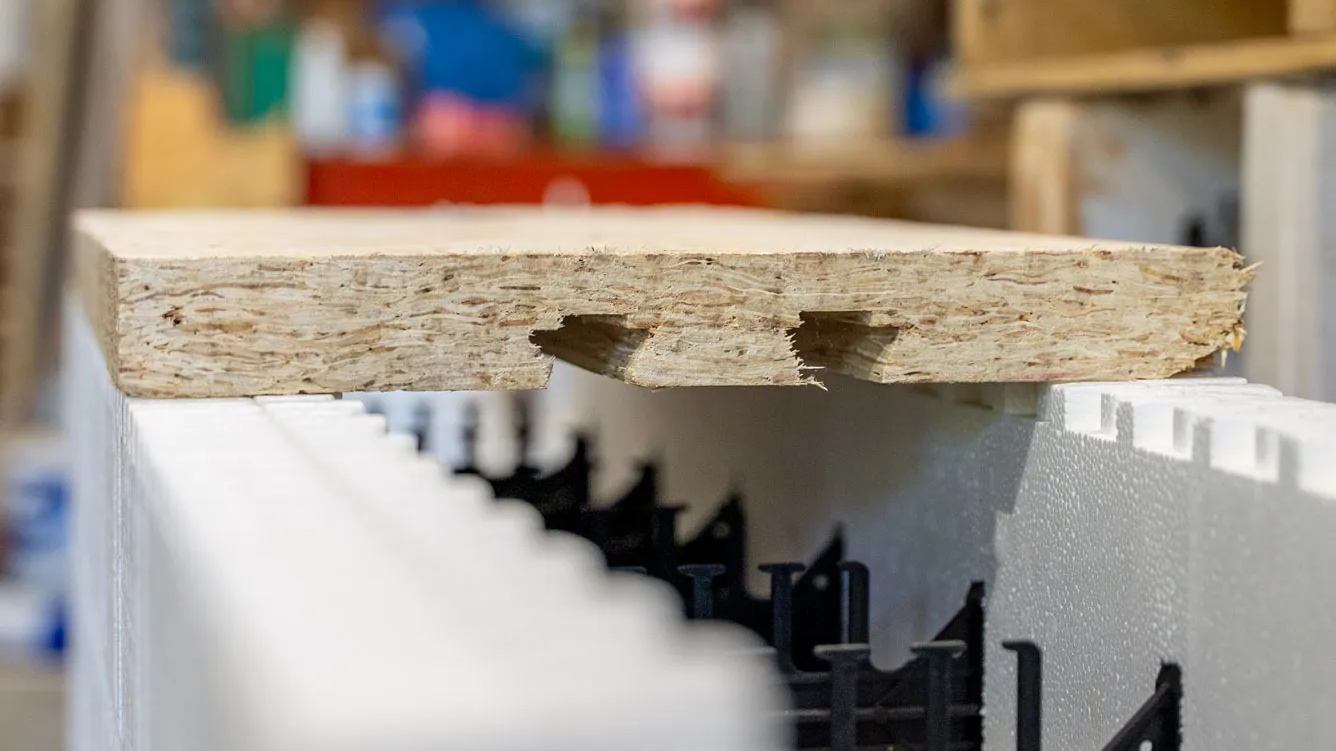
Four buck material options: pressure-treated lumber, non-treated wood, Prebuck, and foam buck
What Buck Material Actually Does
Buck material is the frame installed around window and door openings in an insulated concrete form (ICF) wall. It creates the surface that windows and doors attach to, and it holds the shape of the opening while concrete is poured around it. For more on prepping the openings themselves, see our guide to framing window and door openings.
Plane inserts work alongside the buck as the connection piece between the buck and the ICF block, tying the two together so the opening stays secure and continuous once the wall is poured.
4 Buck Material Options for ICF Window & Door Openings, Compared
Pressure-Treated Lumber: The traditional choice, and still code-worthy. It's the most budget-friendly option, but it can shrink, twist, and crack over time.
Non-Treated Wood: Skips the shrinking, cracking, and swelling that comes with treated lumber. However, it needs a membrane or flashing on the backside so the wood never makes direct contact with the concrete.
Prebuck: A grooved buck material that the concrete locks into as it cures, so there's no membrane, lags, or screws needed on the backside.
Foam Buck ("The Cadillac Version"): An EPS/composite buck with lumber glued and screwed to the face after the pour. This is the option for contractors and homeowners chasing the maximum R-value and the cleanest thermal break around an opening. Check out our guide for installing foam buck for the full walkthrough.
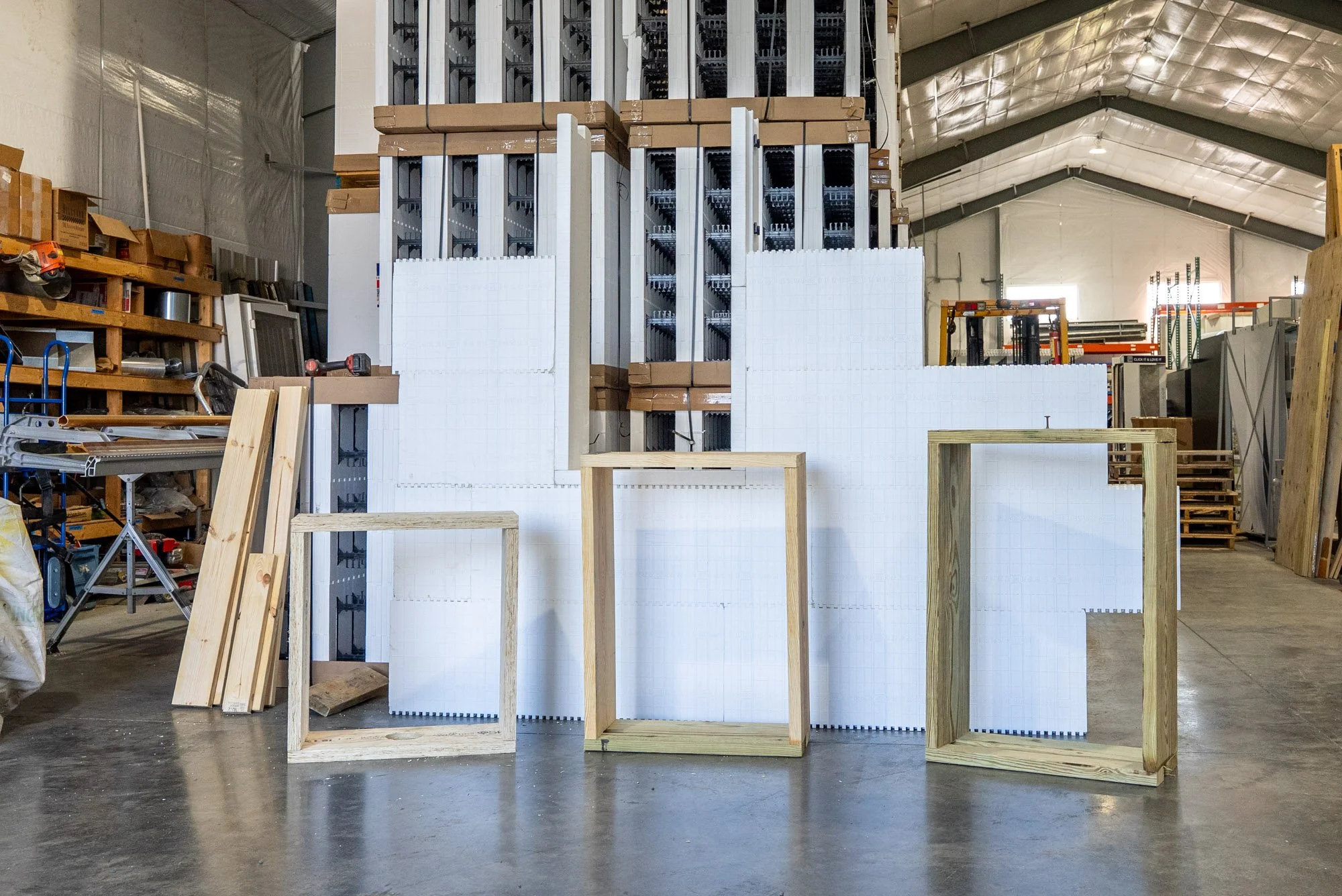
Four buck material options: pressure-treated lumber, non-treated wood, Prebuck, and foam buck
How to Choose the Perfect Buck Material for Your Job's Priority
There's no single "best" buck material, just the right one for what your project needs most:
-
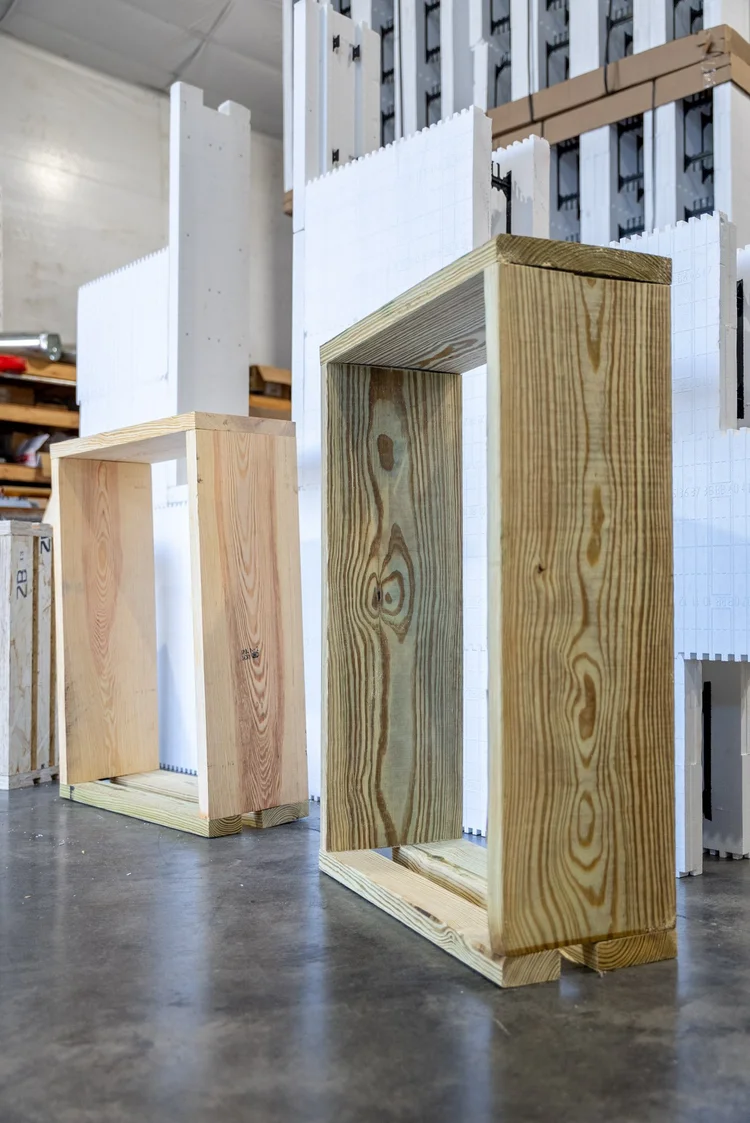
Cost is the priority
Pressure-treated or regular framing lumber gets the job done at the lowest price point. Use our ICF Calculator to get a quick cost estimate for your ICF installation.
-
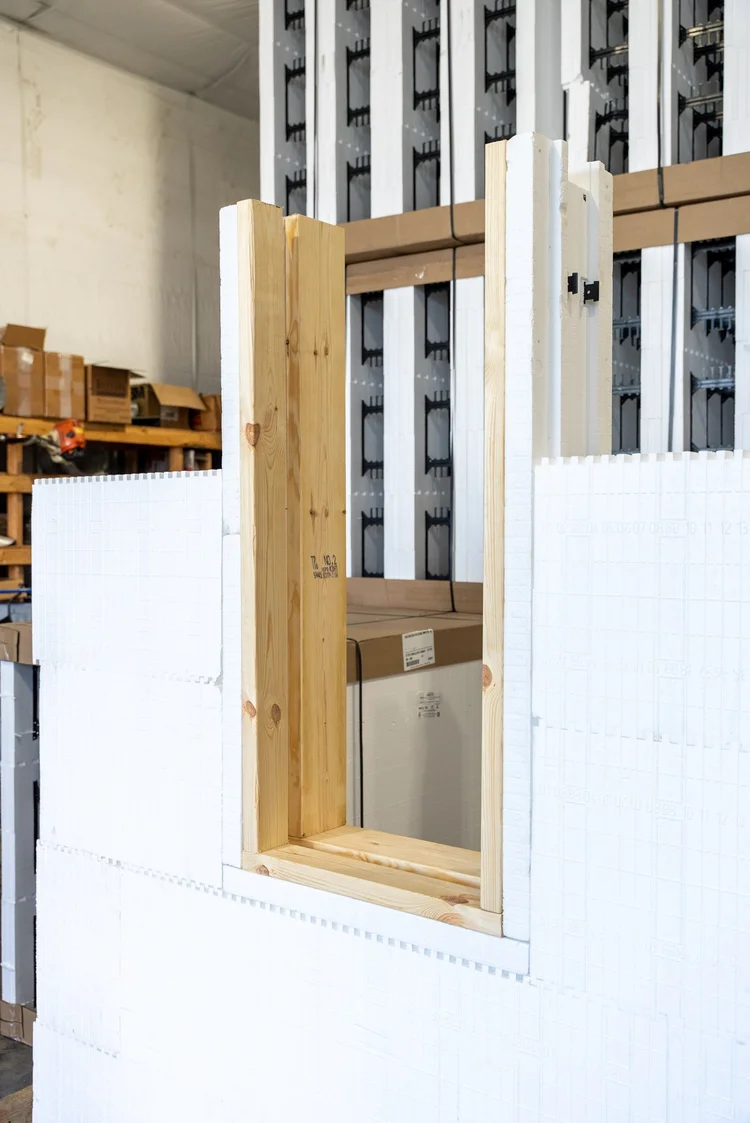
R-value is the priority
Go with foam buck, paired with lumber on top after the pour.
-
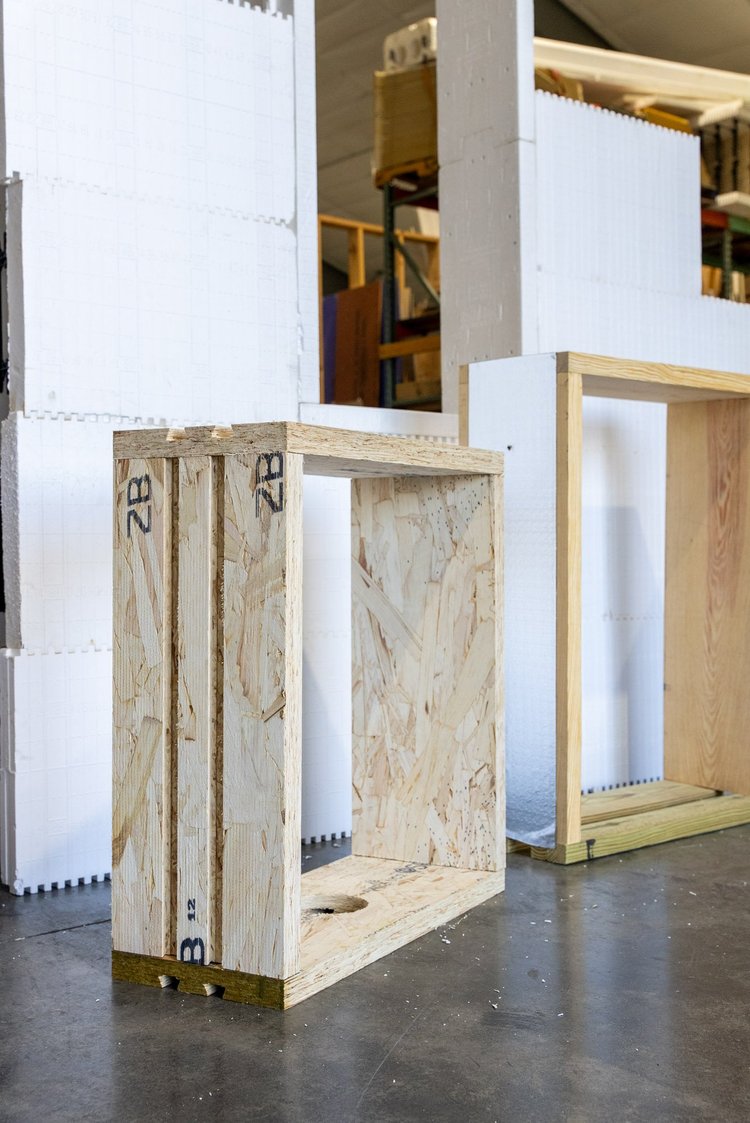
Strength is the priority
Prebuck holds up especially well around doors, where durability matters most.
-
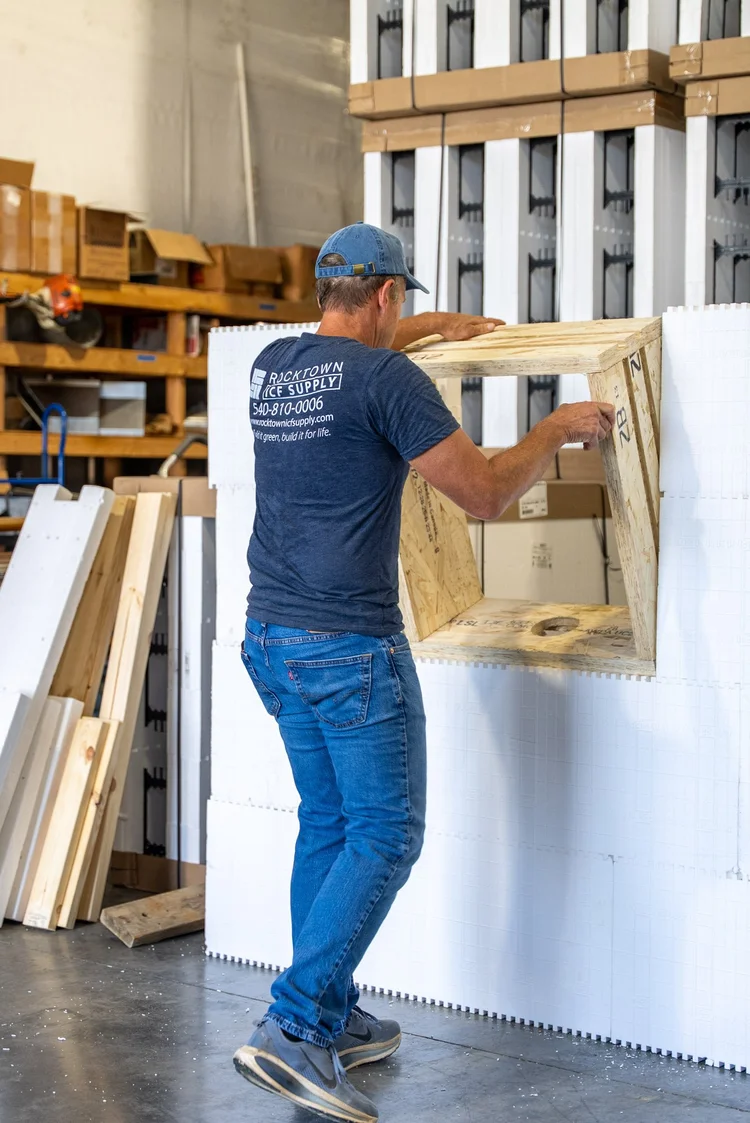
Speed and availability are the priority
Prebuck installs fast, with no membrane or backside fasteners required.

Rocktown ICF Supply's office at 1634 Industry Ct, Harrisonburg, VA
Don't Leave This Decision to the Last Minute
Buck material is worth deciding early, not scrambling to figure out once the pour is already scheduled. We always recommend meeting with our team and your homeowner ahead of time to talk through cost, R-value, strength, and timeline together.
Not sure what your project will cost? Use our ICF Calculator to get a quick estimate.
Frequently Asked Questions
-
Buck material is the frame installed around window and door openings in an ICF wall. It creates the surface that windows and doors attach to and holds the shape of the opening while concrete is poured around it.
-
The main options are pressure-treated lumber, non-treated wood with a membrane, Prebuck, and foam buck. Each one trades off differently on cost, R-value, strength, and speed.
-
Pressure-treated lumber is the traditional, most budget-friendly, code-worthy option, but it can shrink, twist, and crack over time.
-
Foam buck, sometimes called "the Cadillac version," pairs an EPS/composite buck with lumber glued and screwed to the face after the pour, giving the maximum R-value and the cleanest thermal break around an opening.
-
A plane insert is the connection piece between the buck and the ICF block, tying the two together so the opening stays secure and continuous once the wall is poured.
-
Start with whatever priority matters most on the job: cost points toward pressure-treated or regular framing lumber, R-value points toward foam buck, and strength or speed points toward Prebuck.